Trending

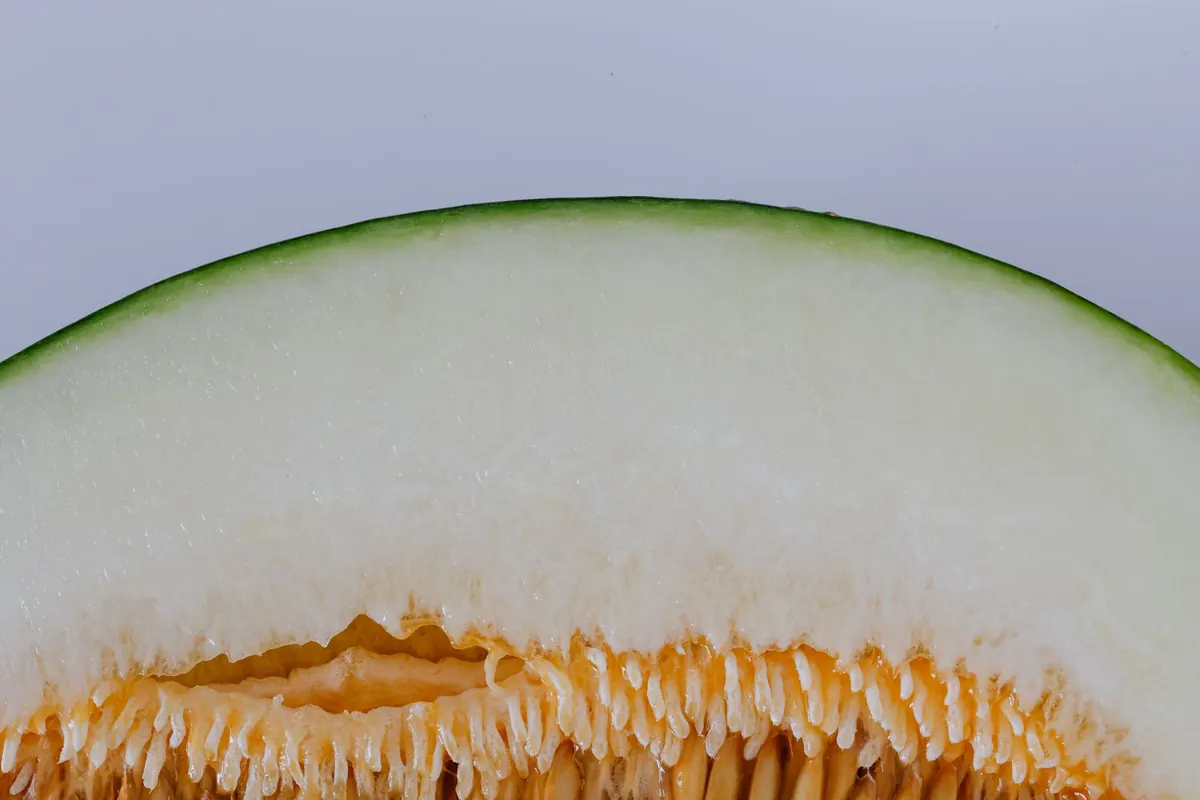
Melons are quiet fruits. They don't blush red like a peach or bruise at the lightest touch, so anyone standing over a crate of cantaloupes has to work a little harder. The good news is that a ripe melon does announce itself, just not all at once. It smells sweet at the blossom end, it feels heavy for its size, its stem scar tells you how it left the vine, and it answers a thump with the right note. No single test is foolproof. Used together, they are remarkably reliable.
Pick the melon up, turn it so the end opposite the stem is facing you, and hold it close. This is the blossom end, and it is where the fruit gives away the most.
For a cantaloupe, you want a sweet, faintly musky smell, the kind that fills a kitchen when you cut one open. If you have to press your nose into it and squint, it needs another day or two. If there is no smell at all, it was picked too early. And if the scent is sharp, fermented or reminds you of nail polish, put it down: that melon is on its way out.
Honeydew is subtler. Even a perfect one may only offer a clean, honeyed sweetness when you get close. Don't wait for a big aroma or you will leave every good honeydew on the shelf. Watermelon barely smells of anything until it is cut, so skip the scent test there and rely on the others.
One practical note: cold mutes aroma. Melons sitting in a refrigerated case will smell like very little. Cup it in your hands for a few seconds to warm the surface, then smell again.
Heft the melon in both hands. It should feel dense and heavy for its size, almost like a shot put wrapped in netting. Weight means water, and water means juice. A melon that feels light for its size is often dry, mealy or simply old. When two melons are the same size, the heavier one is nearly always the better buy.
Now turn it over and press the blossom end with your thumb. You are looking for a slight spring, a little give, like pressing the pad of your thumb. Rock hard means underripe. If your thumb sinks in and leaves a dent that stays, the fruit is overripe and likely to be mushy at the center. Check the sides too. Soft patches anywhere on the rind are a reason to choose another one.
The stem end tells you a lot about how the melon was harvested. A ripe cantaloupe slips off the vine on its own, leaving a clean, shallow, slightly sunken circle. Growers call this a full slip, and it is one of the best signs you will get. If a stub of stem is still attached, the fruit was cut before it was ready.
Honeydew usually arrives with the stem trimmed flush. Look for a small, clean cut with no mold, no dark ooze and no softness spreading around it.
Skin color matters as much as texture. A ripe cantaloupe has raised, corky netting over a background that has gone from green to cream or gold. Green under the netting means it needed more time on the vine. A ripe honeydew turns ivory or pale butter yellow; a stark white-green rind with a slick, waxy feel is usually underripe. Watermelons should show a creamy yellow field spot where the fruit rested on the ground, and the dark stripes should look dull rather than glossy.
Give the watermelon a firm tap with your knuckles or the flat of your palm, then listen and feel. A ripe one gives a hollow, deep, resonant thunk, and you should sense a small vibration in the hand holding it. A flat, dead slap suggests underripe fruit or a mealy texture. A high, ringing ping usually means too much water and too little sugar. Overripe melons can sound hollow as well, so let the yellow field spot and the weight settle the question.
Cantaloupes and honeydews are not thumpers. A light tap that sounds faintly hollow is a small confirmation, nothing more. Go back to scent and the pressure test with those.
Run through this in order. It takes about twenty seconds once you are used to it.
A few things should send you straight to the next melon in the crate:
The four tests apply broadly, but each type leans on a different one.
Scent and the stem scar are your best clues. Charentais in particular is intensely perfumed when ripe and almost odorless when not. Galia turns from green to gold as it ripens, so trust the color shift along with the smell.
Weight and a faint creamy-yellow rind are the strongest signals. Honeydew is often sold slightly firm, and it will soften on the counter, but do not expect it to gain much sweetness there.
Go by the field spot, the weight and the thump. A pale white spot means it was picked early; a creamy yellow one means it sat in the sun long enough to ripen.
If the melon is ripe and you plan to eat it within a day, leave it on the counter. Room temperature brings out the aroma and the sweetness. If it is still a little firm, give it one or two days in a warm spot and check it daily. After that, chill it. Cut melon belongs in the refrigerator in a sealed container and is best within three or four days.
Wash the outside of the melon under running water before you cut into it, even if you are not eating the rind. The knife drags whatever is on the surface straight into the flesh. Serve cold melon slightly cool rather than ice cold so the flavor comes through, and a pinch of salt, a squeeze of lime or a slice of prosciutto will do more for it than any dressing.
One last thing worth knowing: melons do not get meaningfully sweeter after they are picked. A firm cantaloupe may soften a little on your counter, but the sugar is set the moment it leaves the vine. That is exactly why the twenty seconds you spend at the crate, smelling, weighing and pressing, is time well used.