Trending

By the last week of August the market has quietly changed hands. The apricots are finished, the first crates of grapes have appeared, and the whole stall smells of tomato leaves and cut melon. Late summer in Italy is really two seasons pressed together: the hot, dusty peak of August and the softer edge of September, when mornings come in cool and the light starts to slant. For a surprising number of crops, this is the best window of the year. What follows is what to look for, how to judge it without squeezing everything in sight, and what to do when a box of figs lands on your kitchen table all at once.
Timing shifts with latitude and altitude, and it shifts more than most shoppers expect. In Sicily, Puglia and the hot inland basins of Campania, tomatoes are already being split and dried on wooden boards in mid-August, and the prickly pear fruit—fichi d'India—turns up at the roadside stands shortly after. In the north, the same weeks bring the first early apples from Trentino and Alto Adige, and by early September the markets around Verona and Padova begin to fill with late peaches and the first winter squash.
Altitude matters as much as geography. A market in a hill town above six hundred metres may still be selling courgettes and lettuce while the plain below has moved on to pumpkins. If you shop in one place every week, learn your own stall's rhythm rather than the calendar's.
One practical warning: the fortnight around Ferragosto thins out the small producers. Many family farms close their stall for a week or two, and the vendors who remain are often resellers. If a particular grower's tomatoes are the reason you go, ask when they will be back before you plan a big preserving session.
Figs are the emblem of the season and the least forgiving fruit in the market. A ripe fig bends slightly at the stem and often wears a bead of syrup at the eye; it should feel heavy for its size and smell faintly of honey, not of nothing. If the stalk is stiff and straight and the skin dry, it was picked early and will never improve. Eat those within a day or two, and never stack them more than two deep.
Late peaches and nectarines are often better than the July ones—smaller, more perfumed, with flesh that comes away from the stone. Susine, the small Italian plums, are at their peak; look for the dusty bloom on the skin and a slight give at the tip. Apricots from the last late varieties, mostly in the north, will be firmer and more acidic, which makes them better for jam than for eating raw.
Table grapes arrive in force from late August. The white bloom on the skin is a good sign, not dirt—it is a natural wax that protects the berry, and grapes that have been handled too much lose it. Shake the bunch gently; loose berries that fall away easily are past their best.
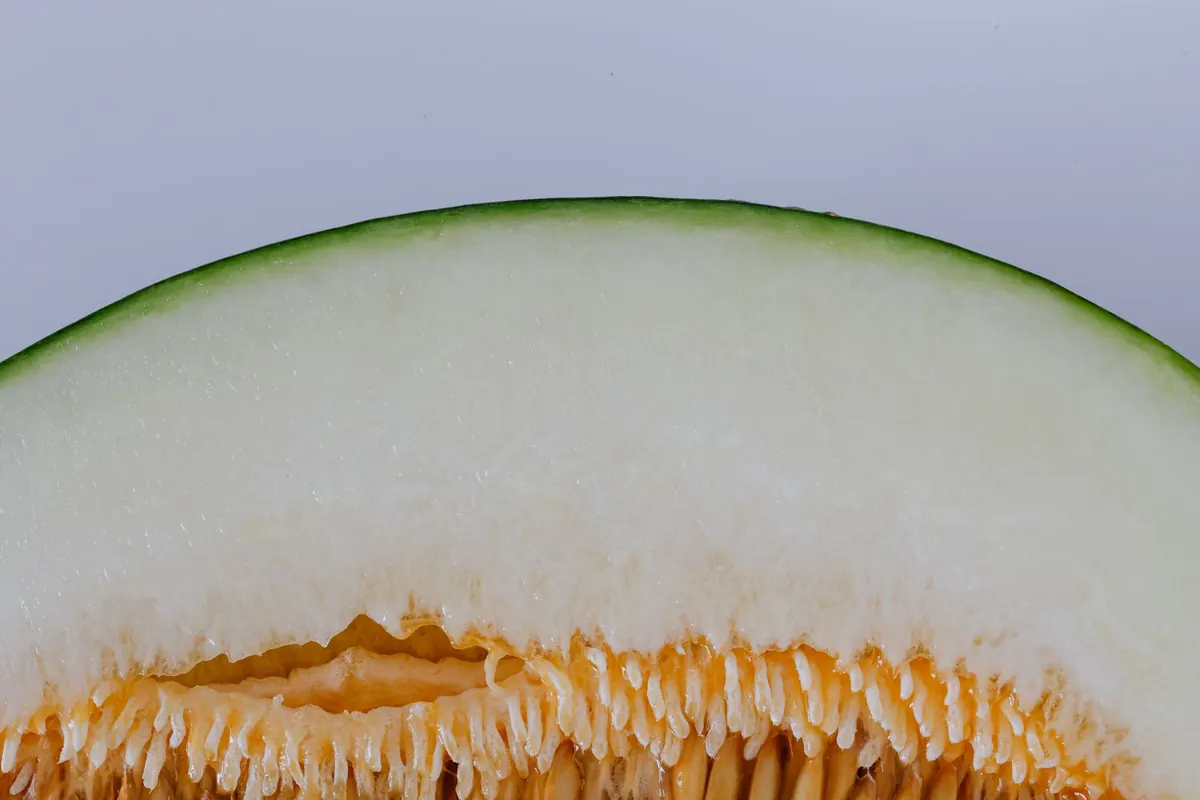
For melons, the smell at the blossom end tells you more than any thump. A ripe melon smells sweet and slightly musky right where the flower was, and the stem end should give a little under your thumb. For watermelon, weight is the honest test: it should feel heavier than its size suggests, and the underside should show a creamy patch where it rested on the ground.
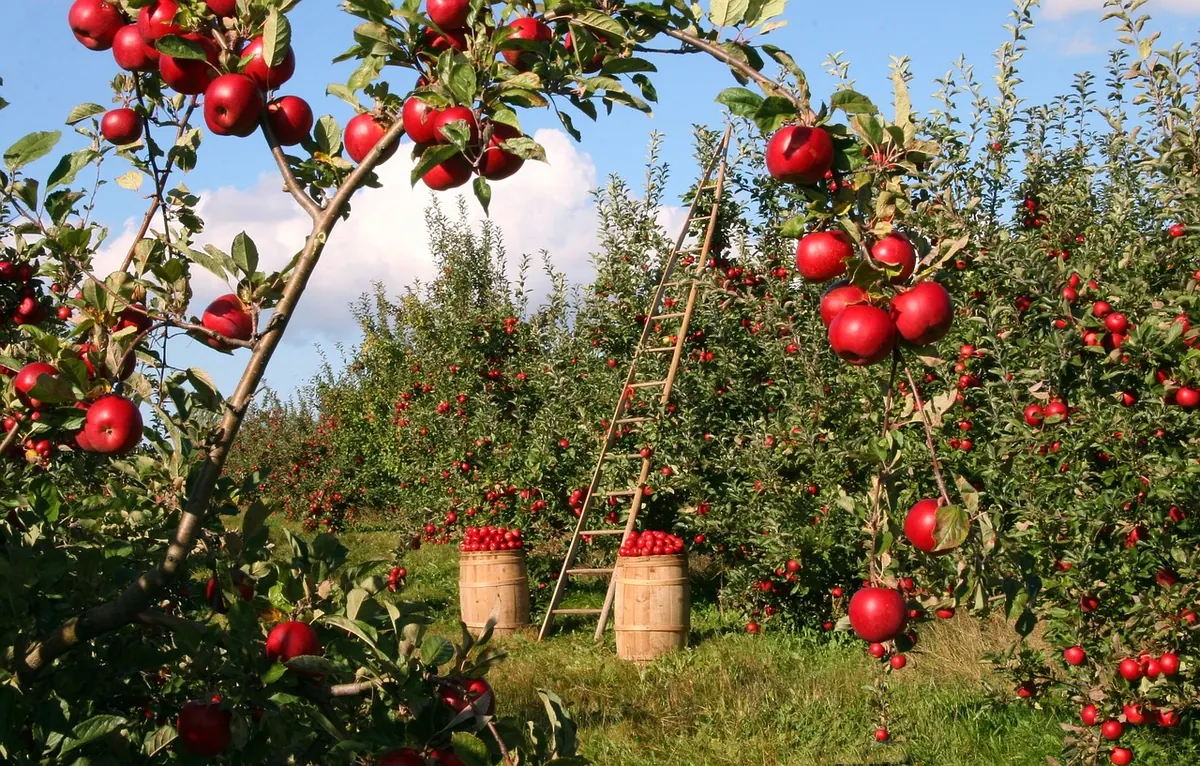
Early pears—Williams, Coscia, the small summer varieties—are in their short season now and bruise if you look at them too long. Buy them firm and ripen them on the counter for two or three days. Early apples are crisp and sharp rather than sweet; they are for eating fresh, not for storing. The keeping apples come later, in October.
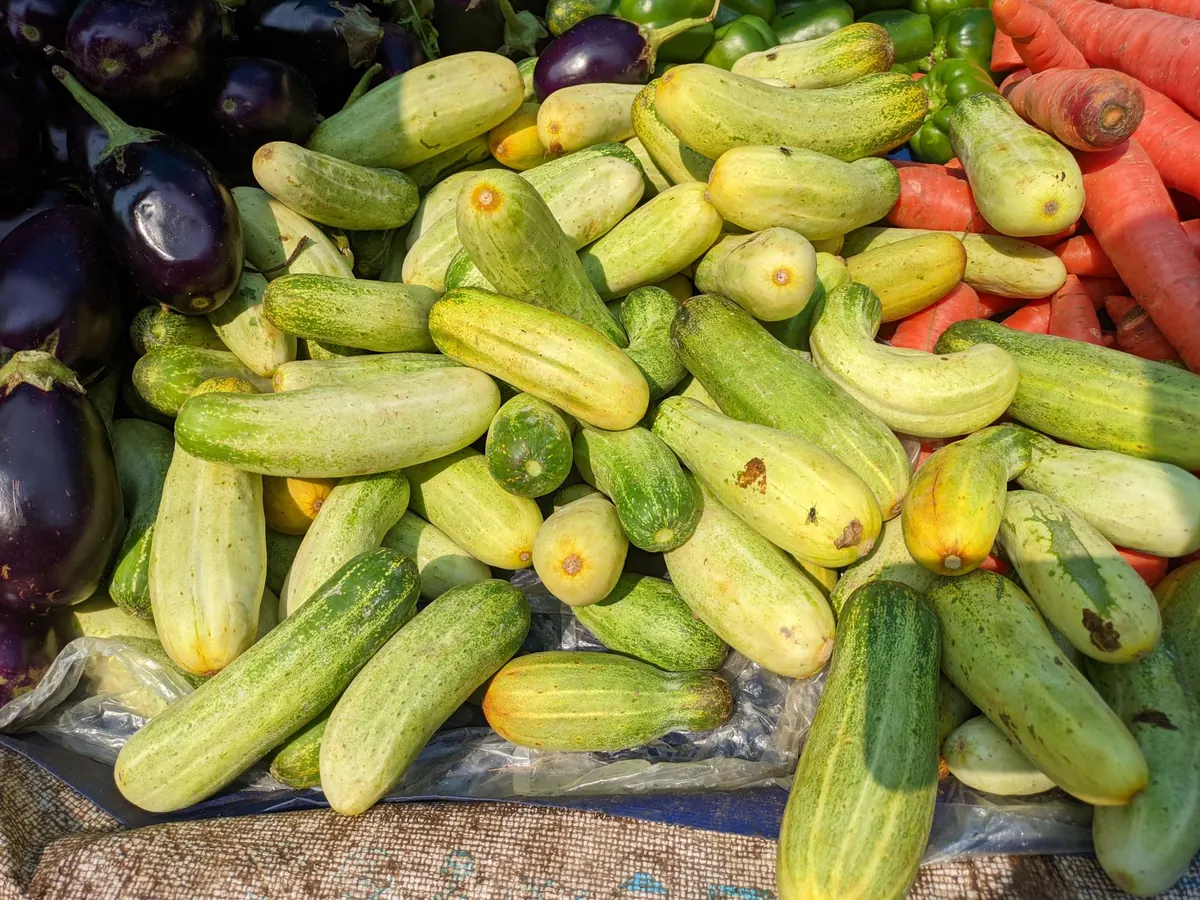
Tomatoes are the centre of the late-summer table, and in many parts of Italy the September crop is the one worth preserving: the plants have had a full season of sun, the fruit is dense, and the skins slip off easily after a quick blanch. Small cherry and datterini types are sweeter now than they were in June. Peppers are thick-walled and cheap, aubergines are glossy and heavy, and green beans are tender enough to eat with nothing but olive oil and salt.
Onions and potatoes are being lifted and cured, which means the ones at the market have not spent weeks in a cold store. Buy a sack of each for the months ahead. Chard and spinach return as the nights cool. Courgettes, by contrast, are finishing: the big ones turn watery and seedy, so choose small and firm or skip them entirely. Basil is at the point of flowering—pinch the tips to keep it going, or make a large batch of pesto now and freeze it in small jars.
A glut is the normal condition of late summer, and it is worth having a plan before it arrives. For tomatoes, the simplest route is passata: wash and halve ripe fruit, simmer until soft, pass through a food mill, then reduce and bottle according to a tested preserving method. Oven-roasting halved tomatoes with garlic, salt and oil, then freezing them flat in bags, gives you something useful in January with far less equipment.
Peppers take well to roasting and peeling, then packing in oil—but if you preserve vegetables in oil, follow a tested recipe from a reliable source and keep the jars cold. Loose, improvised oil preserving carries real risks, and it is not the place to experiment. Figs and soft fruit become jam with little more than sugar and lemon juice; a kilo of figs, a few hundred grams of sugar and the juice of half a lemon, cooked down slowly, will fill two jars.
Buy the quantity you can handle in two days, then buy again. Late summer rewards repetition, not one enormous shop.
Keep tomatoes, basil, melons and stone fruit out of the fridge—cold dulls their flavour and turns peach flesh mealy. Refrigerate grapes, berries, cut melon and leafy greens, but wash them only when you are ready to use them. Figs should be eaten first, then peaches, then plums. Potatoes and onions want a dark, dry, ventilated spot, well away from each other, since onions make potatoes sprout faster.
Go to the market earlier than you did in July, and bring cash and a sturdy bag. Ask each vendor what came in that morning and what is nearly finished, then buy accordingly: small quantities of the fragile things, larger quantities of anything you plan to cook down. If you find a grower whose tomatoes or figs are genuinely good, note the name and the day they attend. By the time the squash and chestnuts arrive in October, you will have a shortlist worth following through the autumn.
Photo: ELEOD / Pexels